


Behind the bar of a high-volume artisan establishment, you learn to read people through what they order. For a long time, vodka was the default for those who wanted alcohol to simply disappear into a mixer. But over the last decade, I have watched a massive behavioral shift occur. Drinkers no longer want anonymity in their glass; they want terroir, complexity, and a story. This realization is exactly what brought me deep into the world of craft distillation, spending years evaluating spirits, touring copper-pot setups, and working directly with botanical formulas.
The modern spirits landscape is experiencing a massive renaissance, and at the absolute center of this movement is a single, deeply misunderstood category: Gin. This spirit is not merely a flavored neutral alcohol; it is a highly regulated, deeply historical canvas of agricultural art. Whether you are a casual consumer looking to elevate your weekend cocktail or an industry professional refining your back-bar curation, understanding the structural mechanics of this liquid changes how you experience every sip.
What is Gin? Definition, Legal Protections, and Structural Identity
When patrons ask me to define the fundamental blueprint of a spirit, I always start with a provocative but technically accurate statement: all gin is born as vodka. At its absolute origin, the process begins with a neutral spirit distilled to a minimum of 95% Alcohol By Volume (ABV) from an agricultural base like wheat, rye, corn, or grapes. This highly rectified base is stripped of almost all distinct organoleptic properties—meaning it has no dominant taste or aroma.
So, exactly what is Gin in the eyes of global regulators? The defining transformation happens when this neutral base is redistilled or infused with natural botanicals, under one non-negotiable legal directive: the predominant flavor profile must be derived from juniper berries (Juniperus communis). Without the pine, resinous, and sharp balsamic notes of juniper, the liquid cannot legally bear the name. The United States Alcohol and Tobacco Tax and Trade Bureau (TTB) and the European Union spirit regulations enforce strict legal definitions that separate this botanical marvel from its neutral ancestors.
| Regulatory Body | Minimum Bottling Strength (ABV) | Core Botanical Mandate | Production Restriction |
| European Union (EU) | 37.5% ABV | Juniper must remain completely dominant | Must utilize an agricultural base spirit; artificial flavor additives are highly restricted depending on sub-class |
| United States (TTB) | 40.0% ABV | Possess the characteristic flavor of juniper berries | Produced by distillation or mixing with aromatics; cannot drop below 80 proof |
Through my hands-on work with distilling apparatuses, I have learned that the line between a mediocre spirit and a world-class masterpiece lies entirely in how the juniper is handled. Juniper contains alpha-pinene and myrcene, volatile oil compounds that deliver that signature “pine needle” and crisp woodiness. A master distiller treats these compounds like a perfumer, balancing the sharp top notes of the juniper with fixative roots and bright citrus mid-notes to ensure the spirit does not taste like a harsh spoonful of pine medicine.
The Fluid Narrative: A Deep Dive into the history of Gin
The liquid in your glass is the direct result of centuries of geopolitical conflict, macroeconomic policies, and medical desperation. To understand its modern identity, we have to look closely at the history of Gin, tracking its evolution from a harsh, therapeutic apothecary medicine into an elite, multi-billion-dollar global commodity.
From Dutch Genever to London’s Gin Craze
The ancestor of modern dry spirits is Jenever (or Genever), a spirit pioneered by 16th-century Dutch apothecaries. During my research travels through traditional distilleries in Schiedam, I observed how they still produce this historical style by distilling a low-proof malt wine made from rye, wheat, and corn, then infusing it with juniper to mask the heavy, cereal-forward distillate. It was consumed primarily for therapeutic purposes, thought to alleviate kidney ailments and tropical fevers. English soldiers fighting alongside the Dutch in the Eighty Years’ War encountered this warming elixir, dubbing it “Dutch Courage” and carrying the habit back across the English Channel.
When the Dutch prince William of Orange ascended to the English throne in 1689, he blocked the import of French brandy and deregulated domestic grain distillation. This historic political maneuver triggered the infamous “Gin Craze” of the early 18th century. London became consumed by unregulated production; back-alley operators used toxic adulterants like turpentine and sulfuric acid to mimic botanical flavors. By the 1730s, consumption reached staggering heights, forcing the British government to pass a series of historic Gin Acts to tax, regulate, and clean up an industry that had thoroughly destabilized the working class of London.
The Royal Navy, Malaria, and the Rise of the Cocktail Age
The transformation into a clean, premium spirit occurred in 1832 with the invention of the Aeneas Coffey continuous column still. This engineering marvel allowed distillers to create highly pure, ultra-clean neutral spirits consistently, laying the groundwork for the dry styles we enjoy today. Simultaneously, the British Empire was expanding into tropical regions where malaria was a constant, deadly threat.
To combat the disease, British citizens and military personnel in India were required to consume daily rations of quinine, a bitter extract derived from the bark of the cinchona tree. To make this intensely bitter medicine palatable, officers combined the quinine powder with carbonated water, sugar, lime, and their daily rations of high-proof naval spirits. This functional medical cocktail evolved into the iconic Gin and Tonic—a drink born out of pure survival that eventually became a timeless fixture of global mixology culture.
The Botanical Spectrum: Exploring the Diverse types of Gin
Walking down the spirits aisle of a well-stocked modern establishment can be visually overwhelming. The rapid expansion of regional craft distilleries has created an unprecedented variety of styles. To navigate this landscape intelligently, it helps to understand the distinct types of Gin based on their production regulations, historical definitions, and flavor architecture.
London Dry vs. Distilled Gin
London Dry represents the absolute pinnacle of traditional distillation discipline. The name is not a geographical restriction—it can be made anywhere in the world—but rather a strict processing standard. Every single flavor element must be introduced exclusively through organic botanicals during a single distillation run inside a traditional still. After the liquid leaves the copper pot, nothing can be added except pure water to cut the spirit to bottling strength, and a microscopic amount of sugar (no more than 0.1 grams per liter). If a distiller makes an error in their botanical ratios, they cannot correct it later with flavor extracts or colorings; the batch is a failure.
Standard Distilled variants, by contrast, operate under far more flexible production guidelines. While they undergo traditional distillation with botanicals, the creator is legally allowed to blend post-distillation flavors, natural extracts, or stabilizing sweetening agents directly into the final liquid. This allows for highly creative flavor profiling but lacks the structural, unadulterated purity demanded by the classic London Dry classification.
Old Tom, Plymouth, and Genever
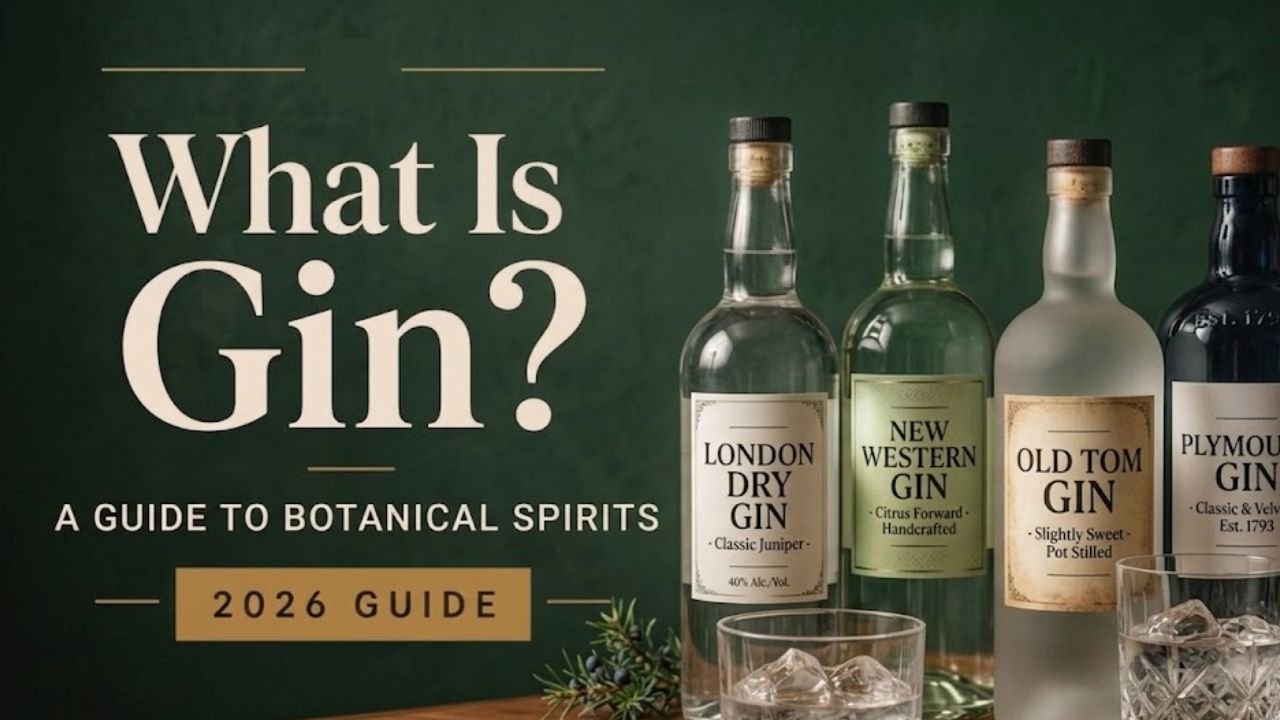
Old Tom is the missing link of the botanical spirits family, bridging the gap between heavy Dutch Genever and bone-dry London styles. Popular during the Victorian era, Old Tom utilizes a generous amount of sweet botanicals like licorice root in the still, and is often lightly back-sweetened with sugar before bottling. It delivers a rich, viscous mouthfeel that cushions the alcoholic bite, making it the non-negotiable historical component for classic pre-Prohibition cocktails like the Tom Collins or the Martinez.
Plymouth holds a rare and deeply coveted status: it is one of the few spirits protected by a strict geographical designation. To bear the name, it must be distilled within the historic city walls of Plymouth, England—a title held exclusively by the Black Friars Distillery since 1793. Plymouth differs from London Dry by utilizing a higher concentration of sweet, earthy root botanicals, specifically Angelica and Orris root, alongside dried sweet orange peel. This specific formulation results in an incredibly smooth, oily, and distinctly earthy spirit that lacks the sharp, aggressively dry finish of its London counterpart.
The Contemporary Global Wave: New Western and Navy Strength
Over the last decade, the craft distilling movement pioneered what is known as “New Western” or Contemporary style. In this category, distillers intentionally step away from centuries of juniper dominance. Instead, they utilize the neutral base to highlight regional agriculture, putting local lavender, Japanese yuzu, African rooibos, or American citrus at the absolute forefront of the sensory experience. Juniper is still present to meet the legal minimum definition, but it acts as a quiet rhythm section supporting a vibrant botanical solo.
Navy Strength spirits are engineered specifically for intense physical performance in mixology, bottled at a mandatory minimum of 57.1% ABV (114.2 proof). The historical origins of this high proof are deeply practical. During the age of naval warfare, spirit rations were stored below deck right next to the ship’s gunpowder supplies. If a barrel leaked and soaked the gunpowder, standard-proof alcohol would wet the powder and render it useless. However, at 57.1% ABV, the spirit is flammable enough that even if it saturates the ship’s gunpowder, the powder will still ignite. From a modern sensory perspective, this high alcohol concentration locks in a vastly higher percentage of volatile botanical essential oils, ensuring the flavors don’t get diluted out when mixed with heavy modifiers.
The Stylistic Architecture of the Global Spirit
To visualize exactly how these diverse categories diverge in their structural design, proof requirements, and palate behaviors, study the foundational comparative grid below.
Detailed Structural Breakdown of Gin Styles
| Style Classification | Minimum Entry Proof (Bottling ABV) | Core Botanical Directive | Allowed Post-Distillation Additives | Primary Palate Notes |
| London Dry | 37.5% (EU) / 40.0% (US) | Juniper must remain completely dominant | Water and minimal sweetener only; absolutely no post-still coloring | Crisp, pine-forward, resinous, aggressively dry, classic finish |
| Old Tom | 40.0% | Juniper balanced with licorice and citrus | Sweetening agents (sugar or sugar-rich malt wine) | Round, viscous, subtly sweet, excellent mid-palate weight and soft finish |
| Plymouth | 41.2% | Earthy roots highlighted (Angelica/Orris focus) | Water only; must be distilled within Plymouth, UK | Earthy, smooth, intensely sweet citrus undertones with an oily body |
| Genever | 35.0% | Malt wine base distilled with light botanicals | Significant malt wine percentages and caramel coloring permitted | Malty, cereal-forward, viscous, closely resembling a young, unaged whiskey |
| Contemporary | 40.0% | Experimental, regional botanicals emphasized | Natural extracts, local florals, and fruit distillates allowed | Eclectic, fruit-forward, herbaceous, intentionally low-juniper profile |
The Physics of Flavor Extraction: Distillation Mechanics
The beauty of a botanical spirit lies entirely within the physical engineering of the distillation run. Having stood next to boiling stills tracking cut points, I can tell you that flavor extraction is a precise exercise in organic chemistry. Distillers utilize three primary mechanical methodologies to pull aromatic oils out of solid agricultural materials and bind them permanently to an alcohol molecule.
The Steep and Boil Method (Maceration)
This is the traditional workhorse method of the spirits world. The distiller loads the high-proof neutral spirit directly into the belly of a copper pot still, dumps the solid botanicals—juniper berries, coriander seeds, dried peels, and roots—directly into the liquid, and turns on the steam jackets. The botanicals steep inside the boiling alcohol for anywhere from 12 to 24 hours, undergoing intense maceration.
As the heat rises, the liquid boils, and the vapor carries the extracted essential oils up the neck of the still. This method delivers an incredibly robust, heavy, and deeply flavorful spirit, as the direct contact extracts deep, oily compounds from thick roots and seeds.
Vapor Infusion via the Carter-Head Configuration
If maceration is an assertive extraction, vapor infusion is pure elegance. In this setup, the solid botanicals never touch the liquid alcohol inside the pot still. Instead, the raw neutral spirit boils down below, and the rising hot alcohol vapor travels up through a specialized column into an elevated copper basket packed with fresh botanicals.
As the vapor passes through the physical gaps in the basket, it gently strips the delicate, volatile top-note oils from volatile florals and fresh citrus peels without cooking them. The vapor then condenses into a remarkably light, ethereal, and beautifully aromatic liquid. This mechanical layout is what gives premium modern brands their signature airy, non-aggressive botanical brightness.
Vacuum (Cold) Distillation
The most cutting-edge technical advancement in modern distilling is vacuum distillation, a process I have seen utilized to capture incredibly delicate flavors that would normally be destroyed by heat. Under normal atmospheric pressure, alcohol boils at roughly 78.3°C (173°F). However, by attaching a powerful vacuum pump to a sealed glass or stainless-steel distilling system, the internal atmospheric pressure is radically dropped.
This pressure reduction drops the boiling point of the liquid down to room temperature, or even lower. Distillers can boil the alcohol and extract flavors at a crisp 15°C (59°F). This allows them to use fresh cucumber, crisp green apples, or fragile wild florals that would instantly oxidize, scorch, or taste “cooked” inside a standard hot copper pot still.
The Clear Competitor: Global Vodka Brands and Market Value
To fully comprehend the structural beauty and financial gravity of botanical spirits, we must carefully analyze the massive market segment from which they emerge: the international neutral spirit landscape. Because every bottle of botanical gin requires a highly rectified neutral base as its canvas, the production, economics, and sourcing of premium vodka brands directly dictate the supply chains and market trends of the wider spirits world.
The global vodka market represents a massive commercial force, acting as the absolute foundational standard for industrial neutral spirit purification. Below is an analytical, production-focused evaluation of the ten dominant global brands shaping the modern market.
Comprehensive Competitive Base Matrix (Vodka Brands & Pricing)
| Brand Designation | Country of Origin | Agricultural Base Ingredient | Distillation Method Type | Average Retail Price (750ml in INR) | Target Consumer Profile & Structural Use-Case |
| Belvedere | Poland | Dankowskie Gold Rye | Four-column continuous rectification system | ₹3,360 | Super-premium neat sipping; crisp black pepper rye finish |
| Grey Goose | France | Picardie Winter Wheat | Five-stage continuous column process | ₹3,170 | Ultra-luxury cocktail foundation; buttery, soft almond finish |
| Ketel One | Netherlands | 100% Non-GMO Wheat | Combination column and copper pot finishing | ₹2,400 | Professional bartender standard; clean citrus zest top-notes |
| Stoli (Stolichnaya) | Latvia | Wheat and Rye blend | High-volume industrial multi-column unit | ₹1,920 | High-volume well speed; rigid grain profile for heavy mixers |
| Tito’s Handmade | United States | 100% Yellow Corn | Old-fashioned copper pot batch stills | ₹2,110 | Mass-market gluten-free focus; highly unctuous sweet corn body |
| Absolut | Sweden | Winter Wheat | Continuous single-source distillation | ₹1,820 | Mid-tier mixing standard; neutral dried fruit and bready palate |
| Cîroc | France | Gaillac & Cognac Grapes | Five-column fractional extraction system | ₹2,880 | Lifestyle brand; distinctly bright citrus-grape fruit finish |
| Reyka | Iceland | Wheat and Barley blend | Carter-Head style copper still | ₹2,210 | Eco-conscious craft segment; ultra clean lava-rock filtered liquid |
| Chopin Black | Poland | Stobrawa Potatoes | Traditional single-column copper batch | ₹3,070 | Connoisseur luxury tier; heavy, exceptionally creamy mouthfeel |
| Haku | Japan | 100% Hakumai White Rice | Bamboo charcoal filtration over pots | ₹2,690 | Minimalist martini focus; soft, subtly sweet clean rice finish |
Cultivating the Palate: The Professional Tasting Methodology
Evaluating a highly complex botanical spirit requires a structured, analytical technique far removed from casual social drinking. To map out the intricate botanical architecture of a premium distillates flight at home, I recommend utilizing the identical technical sequencing protocol we use in professional judging panels.
Step-by-Step Sensory Protocol
- Glass Selection and Architecture: Always bypass standard shot glasses or wide tumblers. Instead, utilize a stemmed, tulip-shaped nosing glass (such as a Glencairn or a small white wine glass). The tapered chimney of a tulip glass physically concentrates the highly volatile aroma compounds, directing them straight to your olfactory receptors while allowing harsh ethanol vapors to dissipate safely outward away from your nose.
- The Initial Neat Evaluation: Pour exactly one ounce of the liquid at room temperature (around 20°C or 68°F). Do not chill the liquid or add ice yet, as cold temperatures physically lock down the essential oils, desensitizing your palate. Bring the glass slowly toward your face. Keep your mouth slightly open while breathing in through your nose; this equalizes the internal air pressure and prevents raw alcohol burn from temporarily blinding your sensory nerves. Focus your mind on identifying the sharp, immediate top-notes: look for bright pine needle, pungent cracked coriander spice, or immediate citrus peel brightness.
- The Critical Hydration Phase: Take a small sip neat to coat your tongue, noting the initial mouthfeel, heat, and structural weight. Next, add an exact equal measure of filtered, room-temperature water directly into the glass (a 50:50 dilution). This step is rooted in deep chemical physics: adding water rapidly drops the ABV down to roughly 20%, breaking the tight chemical bonds holding the hydrophobic botanical essential oils in suspension. This sudden release causes the volatile oils to bloom across the surface of the glass, exposing the complex, subtle foundation notes—such as earthy roots (Angelica/Orris), warm bark spices (Cassia/Cinnamon), or delicate background florals—that were previously masked by the heavy alcohol content.
Final Verdict: Why Gin Remains the Distiller’s Greatest Canvas
As we look toward the future of global spirit production, it is clear that the botanical spirit category has permanently evolved past its historical limitations. It is no longer defined by cheap industrial operations or the simple, singular goal of delivering masking flavors to an unrefined base spirit. Instead, it has taken its rightful place as the absolute highest creative expression of a master distiller’s blending and extraction capabilities.
The financial data and regional production shifts heading through 2026 tell a compelling story of permanent premiumization. Consumers around the globe are demonstrating a clear willingness to step away from volume-based purchasing habits, choosing instead to seek out authentic, small-batch expressions that offer a powerful sense of regional identity. From a production standpoint, it offers an immediate, fascinating window into localized agriculture—allowing a craftsman to bottle the exact scent of a Mediterranean mountainside, an Indian spice market, or a dense Pacific Northwest forest inside a single run of clear liquid.
For the cocktail enthusiast and the professional bartender alike, the spirit represents an irreplaceable mixological foundation. No other clear liquid possesses the structural integrity required to cut through heavy vermouths, complex bitters, and fresh citrus juices while remaining the defining aromatic driver of the final drink. The next time you pour a measure of a clean London Dry or an earthy Plymouth into your mixing glass, look past the clear color. Appreciate it for what it truly is: a beautifully engineered, liquid archive of botanical history, balancing centuries of European tradition and advanced organic chemistry within a single, flawless glass.