


A cold glass of beer looks simple from the outside. You order it, take a sip, and enjoy the flavor. But behind your glass of beer, there is much more work going on before serving beer. In order to create a beverage that has a long history of thousands of years, brewers are particularly careful when choosing the ingredients, temperatures, fermentation, and refinement of flavors.
Many are familiar with the names of well-known brands of beer. Instead, few individuals understand why one type of beer is refreshing and crisp and the other is rich and roasted. Other drinkers such as light lagers. Rather, people resort to crisp IPAs or smooth stouts. The average explanation of those differences is extremely simple; ingredients, preference of brewing, and fermentation methods.
The article discusses what beer is, how brewers make it, what influences its taste, and why beer culture continues to flourish in cities such as Seattle and Ballard. Along the way, you will also discover how different styles develop their unique character and why understanding the basics of beer can make every pint more enjoyable.
What Is Beer?
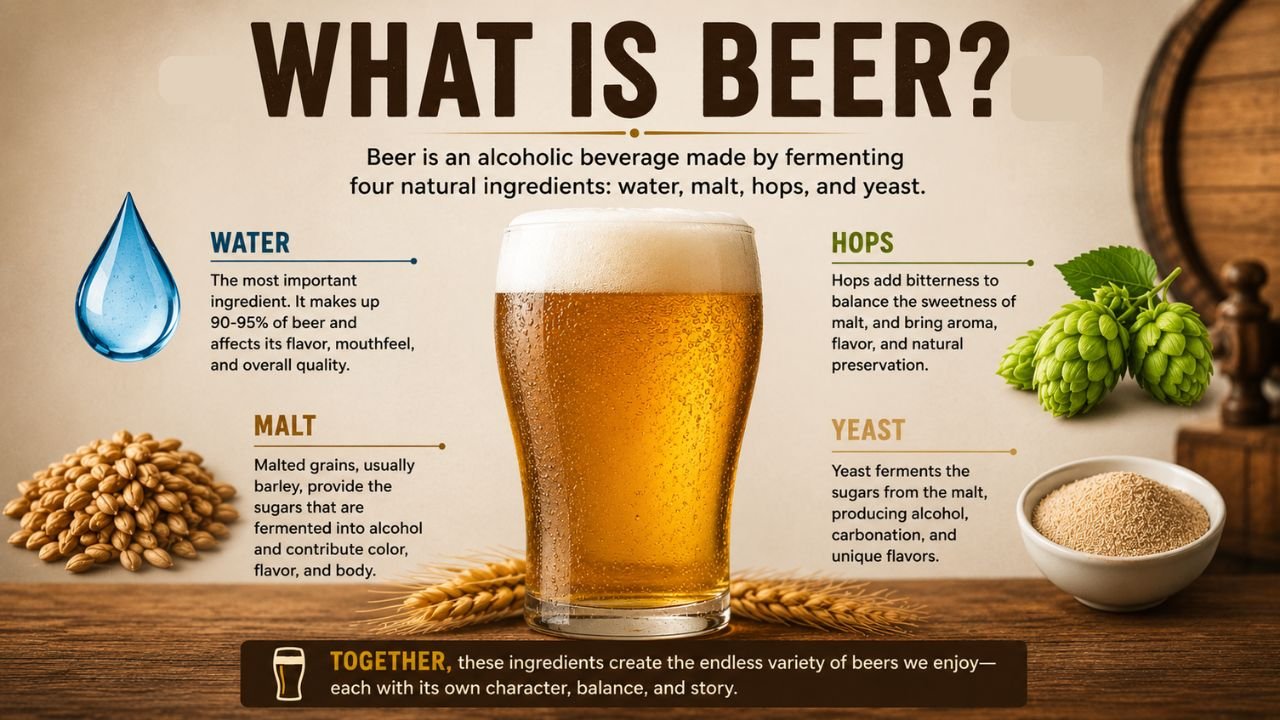
Beer is an alcoholic beverage made by fermenting sugars from malted grains using yeast. The four primary ingredients are water, malt, hops, and yeast.
Why Has Beer Remained Popular for Thousands of Years?
Brewers combine water, malt, hops, and yeast to produce alcohol, carbonation, aroma, and flavor. The slight alteration of the products can have entirely varying outcomes. The four ingredients can be utilized by a brewer and still come up with a crisp pilsner, a fruity wheat beer, or a dark stout. Beer has been popular due to its variety. Beer has thousands of combinations, unlike many drinks, which remain within a small flavour range. Some produce citrus flavors, and others present coffee, chocolate, bread, caramel or tropical fruit.
The Historical Reasons Behind Beer’s Global Popularity
Beer has survived changing trends because it adapts easily to different cultures and tastes. Ancient civilizations brewed beer long before modern equipment existed. Today, breweries use advanced technology, but the basic concept remains remarkably similar.
| Beer Characteristic | Why It Matters |
| Fermentation | Creates alcohol and carbonation |
| Malt | Adds sweetness and body |
| Hops | Adds aroma and bitterness |
| Yeast | Develops flavor during fermentation |
| Water | Forms most of the finished product |
The beauty of beer lies in this balance. Every ingredient contributes something important, and brewers constantly experiment with new combinations.
Common Beer Terms Explained for Beginners
New beer drinkers often encounter unfamiliar terminology. Understanding these terms can make learning about beer much easier.
| Term | Meaning |
| Ale | Beer fermented at warmer temperatures |
| Lager | Beer fermented at cooler temperatures |
| ABV | Alcohol percentage |
| IBU | Bitterness measurement |
| Craft Beer | Beer produced by independent breweries |
| Session Beer | Lower-alcohol beer designed for extended drinking |
| Dry Hopping | Adding hops after fermentation for aroma |
The familiarity of these terms will make consumers feel more comfortable using them to order or to talk about beer.
How Is Beer Different From Wine and Spirits?
There are a lot of individuals who bundle beer, wine, and spirits, who happen to be the ones that contain alcohol. Nevertheless, how they are produced varies greatly among producers. Their composition, the methods of production, their taste compartments and degrees of alcohol give completely diversified drinking experiences.
Brewed beer is made with fermented grains such as barley, wheat, rye or oats. Fruits or grapes are fermented to produce wines. The spirits themselves are initiated as liquids which have been fermented, but are subsequently distilled, thereby increasing their alcohol level very high. This renders beer to be less alcoholic as compared to wine or spirits.
Ingredients Create Distinct Characteristics
The product ingredients and quantities used in the production affect the smell to the taste of the product. Beer is based on malt, hops, yeast and water. Wine is heavily reliant on grape varieties and fermentation. Spirits may be based on grains, fruits, sugarcane, potatoes or other fermentable substances.
Because the raw materials differ so much, each beverage develops its own flavor identity.
Alcohol Content Comparison
| Beverage | Average Alcohol Content |
| Beer | 4%–8% ABV |
| Wine | 10%–15% ABV |
| Spirits | 35%–50% ABV |
The lower alcohol level often makes beer a more session-friendly beverage, while spirits are usually consumed in smaller servings.
Production Methods Make the Biggest Difference
Brewing and fermentation are employed in beer. Wine is majorly fermented. Spirits entail fermenting and subsequent distillation.
Water is removed by distillation and alcohol concentrated. This additional process is why spirits have much more alcohol than beer.
Flavor Experience and Drinking Style
Beer is commonly regarded to be giving a broad flavor spectrum comprising of bread, caramel, citrus, coffee, chocolate, tropical fruit and roasted qualities. Wine accentuates the properties of fruits, acid and tannin. Distillation results in the presentation of the concentrated flavors by spirits.
A drinker who takes a light lager has a totally diverse experience of that of another who is sipping on whiskey or red wine. All of the categories have their own purposes and target different tastes.
The Key Ingredients That Determine Beer Flavor, Aroma, and Texture
All beers begin with a limited combination of ingredients but the same ingredients can make thousands of different flavor combinations. To create an individual drinking experience, brewers manipulate amounts, the degree of roasting and the fermentation process.
1. Water Creates the Foundation of Flavor
The majority of the finished beer consists of water, so the quality of water influences the final product of the beer more than many may think. Mouthfeel, crispness, balance are influenced by mineral content. It was the natural water profile that helped different brewing regions to become famous.
2. Malt Builds Body, Sweetness, and Color
Malt contributes to the flavor and texture, besides providing the sugars required to be fermented. The roasting of malts contributes light bread-like flavors, but darker malts provide caramel, coffee-like or chocolate-like flavors. The malt used has a great effect on the appearance of the beer.
3. Hops Shape Aroma and Bitterness
Hops help to balance sweetness while giving beer unique aroma characteristics. Some varieties of hops produce citrus and tropical fruit flavors; while other types create pine, floral, or herbal flavor profiles. Consequently, brewers will often use a range of hops in order to produce more complex flavor profiles.
4. Yeast Drives Fermentation and Character
Sugars are converted to carbonation and alcohol by yeast. Simultaneously, it generates flavor compounds which influence the overall nature of the beer. The strains of yeast can produce fruity, spicy, or clean tasting.
Inside the Brewing Process: How Raw Ingredients Become Beer
Many people understand the ingredients but remain curious about the actual brewing process. Fortunately, the process follows a logical sequence. Every stage serves a specific purpose.
Malting Creates the Foundation
Raw barley is the starting material for brewers. They place the grain and make it germinate. Later, they dry it using controlled heat. This process makes ready the enzymes that aid in breaking down starch into sugar.
Mashing Unlocks Fermentable Sugars
Brewers mix malt with hot water inside a vessel called a mash tun. The heat activates enzymes that break down starches into sugars. This creates a sweet liquid known as wort.
Boiling Shapes Flavor
Wort (a mixture of sugar and water) is boiled by brewers and hops are added in various steps. Bitterness is produced by early hop additions. Additions thereafter add aroma and flavor. Since timing is important, brewers think hard before deciding to add each hop.
Fermentation Brings Beer to Life
After the wort has cooled, brewers put in yeast. The sugar is consumed by the yeast to produce alcohol. Flavor compounds also form at this time. Fermentation can require a few days or weeks, depending on the style.
Conditioning Refines the Final Product
Beer often rests after fermentation. This stage allows flavors to mature and become more balanced. Some styles need only a short conditioning period. Others benefit from extended aging.
Brewing Process Overview
| Stage | Purpose |
| Malting | Prepare grain |
| Mashing | Extract sugars |
| Boiling | Add hops and sterilize wort |
| Fermentation | Produce alcohol |
| Conditioning | Improve flavor |
| Packaging | Prepare for serving |
The skill in a brewer is reflected in these stages. Minor changes may make a huge impact on the end product.
What Are the Main Types of Beer?
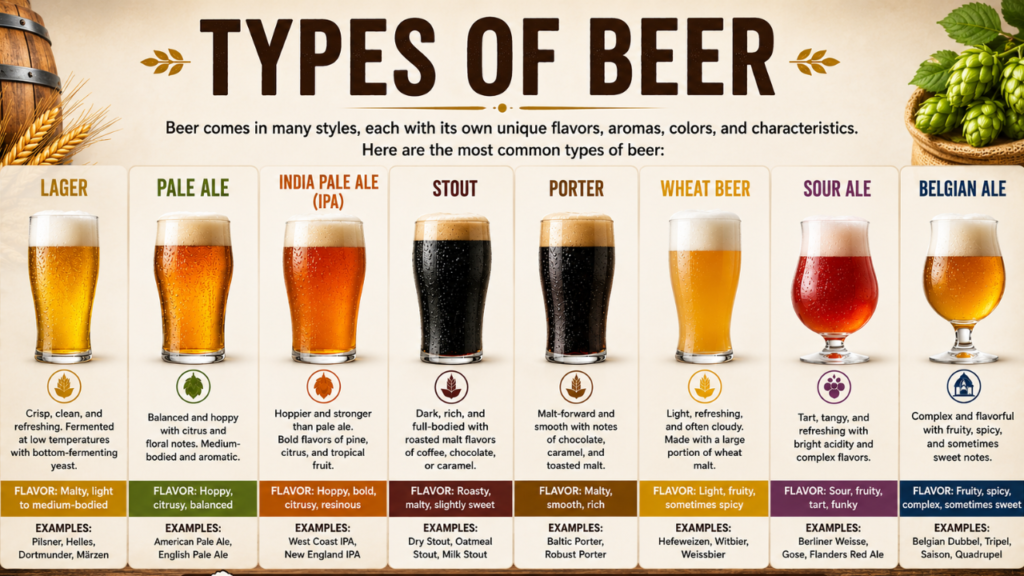
Learning about Types of Beer becomes much easier once you understand the major categories. Although hundreds of styles exist, most beers fall into a few broad groups.
1. Ale
The warmer temperatures of fermenting ale result in very fruity aromas and higher perceived intricacy of flavor. Common examples are pale ales, IPAs, stouts, and Belgian type of beers.
2. Lager
Lagers are slow fermenters that ferment at cooler temperatures. This processing produces less coarse flavours and a clean finish. Lager is a broadly popular type of beer due to its relaxing flavor that is common in many of the widely-used beers on the planet.
3. Specialty Beer Styles
Brewer Specialty Beers enable the brewers to experiment in terms of ingredients and method. Additions of fruit, barrel aging, wild fermentation, and souring techniques produce distinctive products that are not typical to traditional styles.
4. Seasonal Beers
Many breweries have beers that are labeled according to the season. Light and refreshing are often served during summer, whereas colder weather has brought darker and richer designs and deeper flavor profiles.
Comparing Major Beer Categories
| Category | Typical Flavor Profile |
| Ale | Fruity and complex |
| Lager | Clean and crisp |
| Sour | Tart and refreshing |
| Stout | Roasted and rich |
| Wheat Beer | Light and smooth |
Why Do Different Beers Have Different Colors?
The biggest myth about the beer is about color. There is a perception among a good number of individuals that stronger beer comes in darker forms. Such an assumption is generally wrong. The color of beer is mostly through the choice of malts. The brewers get various hues by roasting the grains to different degrees. Pale lager is made with pale roasted malt. A stout is based on malt that is roasted heavily. Color influences the appearance and taste, but not the alcohol content.
Understanding Beer Colors:
| Color | Typical Style Examples |
| Straw | Pilsner |
| Gold | Blonde Ale |
| Amber | Amber Ale |
| Brown | Brown Ale |
| Black | Stout |
Color can offer clues about flavor. Darker beers are generally roasty, whereas light beers are more even-handed towards crisp and fresh. Yet, there are exceptions, which make the exploration of beer more entertaining.
Many first-time drinkers are turning away from dark beer as they think that such drinks will be very bitter. But there are stouts that even do feel smooth, compared to some one or other hop-forward pale beers. Such surprise tends to modify the way folks intend to tackle new fashions.
Beer Industry Statistics 2026 and Market Trends
Beer is one of the most universally used alcohol. As more consumers start changing their tastes and preferences, the industry has remained very strong amidst the fluctuating economic environment, changing demographics and increased competition posed by substitute drinks.
Most breweries are no longer competing to do things in large quantities but are emphasizing on high quality products, local production and experience. Concurrently, consumers want more variety and this has prompted breweries to diversify their portfolio beyond the traditional lagers.
“Industry estimates are based on global brewing industry reports, market research studies, and beverage market forecasts.”
Key Beer Industry Figures for 2026
| Industry Metric | 2026 Estimate |
| Global Beer Market Value | Over $850 Billion |
| Craft Breweries Worldwide | 25,000+ |
| U.S. Craft Breweries | 9,500+ |
| Most Popular Style Globally | Lager |
| Fastest Growing Segment | Premium Craft Beer |
| Leading Hop-Producing Region in U.S. | Pacific Northwest |
How to Choose the Right Beer for Your Taste Preferences
Whenever consumers concentrate on the flavors that they already like, search of the right beer becomes easier. Beer exploration is best initiated at a personal level. Those who consume light beers can take lagers or pilsners. IPAs tend to attract those, who enjoy citrus tastes. Stouts and porters may be worth considering to drinkers who like coffee or chocolate.
Flavor-Based Beer Recommendations
| Flavor Preference | Recommended Beer Style |
| Light and Crisp | Lager |
| Fruity and Refreshing | Wheat Beer |
| Citrus and Tropical | IPA |
| Rich and Roasted | Stout |
| Balanced and Smooth | Amber Ale |
Using flavor preferences as a guide can simplify the process of discovering new beer styles.
Common Brewing Mistakes Made by Beginners
The process of brewing beer might seem simple, but even little errors can have great influence in the end product. New brewers tend to emphasize ingredients at the expense of control and consistency of the process. Being aware of typical errors enables beginners to attain higher results faster and not to get frustrated in the process of learning.
1. Poor Temperature Control During Fermentation
The temperature of the fermentation is a significant factor in the development of the flavor. Too much heat can produce undesirable flavors and on the contrary, too low temperatures can slow down yeast action. Experienced brewers pay close attention to fermentation since the slightest temperature changes may affect the end product of beer.
2. Inadequate Cleaning and Sanitization
Poor sanitation practices are the cause of many brewing problems. Unintended bacteria and wild yeast may affect flavor, aroma and stability. Sanitation is one of the most crucial aspects in brewing and as such, professional breweries invest much time in the cleaning process.
3. Rushing the Brewing Process
New brewers just get in a hurry in the process of fermentation and conditioning. Nevertheless, most beers have the advantage of time as flavors keep progressing once major fermentation is terminated.
4. Incorrect Ingredient Measurements
Exact measurements are the means to consistency. Minor changes in hops, malt or water chemistry can create some noticeable difference in the flavor.
The Science Behind Beer Flavor and Drinking Experience
The taste of beer is achieved through a mixture of products, method of brewing, and choice of fermentation. There is no defining factor for the final result. A brewer needs to strike the right balance between sweetness, bitterness, aroma, body, and carbonation. A combination of these factors makes beer even better. Malt adds savor and mouthfeel. Hops are a source of bitterness and aroma. Yeast inoculates delicate-compound flavor. Mouthfeel and balance are affected by water.
An example is useful in clarifying this point. Consider the case of two breweries that produce IPA. The malt bills are very similar between the two breweries, but they vary in the choice of hop varieties. Grapefruit/citrus: One IPA can be grapefruit-flavored. The remaining can feature pine and tropical fruit tastes. The drinking experience is radically different as the recipe varies slightly. This diversity is why beer is interesting even to those who have been passionate drinkers.
| Expert Insight“Many professional brewers consider fermentation control the most critical stage of brewing. Even when high-quality ingredients are used, poor temperature management during fermentation can create off-flavors and reduce overall beer consistency.” |
How Regional Brewing Traditions Influence Beer Styles
Beer styles do not develop by accident. They evolve over time through local ingredients, climate conditions, cultural preferences, and brewing practices passed down through generations. As a result, different regions around the world have created distinctive beer styles that reflect their history and environment.
A brewer in Germany traditionally works with different ingredients and techniques than a brewer in Belgium, the United States, or the United Kingdom. These regional differences influence everything from flavor and aroma to color and alcohol content. Even today, many modern breweries continue drawing inspiration from traditional brewing methods while adding their own creative touch.
Local Ingredients Shape Regional Beer Identity
The ingredients available in a region often determine the types of beer produced there. Water chemistry, hop varieties, grain quality, and yeast strains all influence the final product.
For example, the soft water found in the Czech city of Pilsen helped create the famous Pilsner style. Meanwhile, regions known for hop farming often produce beers with stronger hop character because fresh ingredients are readily available.
| Region | Famous Beer Style | Key Influence |
| Germany | Helles Lager | Clean malt character |
| Czech Republic | Pilsner | Soft water profile |
| Belgium | Belgian Ale | Unique yeast strains |
| United Kingdom | Bitter Ale | Traditional malt focus |
| United States | IPA | Hop-forward brewing |
Climate and Brewing Conditions Matter
Before modern refrigeration existed, brewers had to work with local temperatures and seasonal conditions. This reality shaped many traditional beer styles.
German brewers developed lagers because cooler climates supported cold fermentation. In contrast, warmer regions often produced ales because yeast performed better at higher temperatures. These historical practices eventually became part of each region’s brewing identity.
Cultural Preferences Drive Style Development
Consumer tastes also influence beer styles. Different cultures prefer different flavor profiles, which encourages brewers to adapt their recipes.
British drinkers traditionally favored balanced malt-forward ales, while Belgian brewers became known for complex and expressive yeast-driven beers. American craft brewers later embraced bold hop flavors, leading to the rise of modern IPAs.
Traditional Methods Continue to Influence Modern Brewing
Many breweries still follow regional brewing traditions even while using modern equipment. Traditional German lagers, Belgian Trappist ales, and British bitters remain popular because they represent centuries of brewing knowledge.
At the same time, modern brewers often blend traditional techniques with new ingredients and innovative methods. This combination allows breweries to honor history while creating unique products for today’s consumers.
A Real-World Example of Regional Influence
Consider an American IPA and a traditional German Pilsner. Both are beers, yet they deliver completely different experiences. The IPA emphasizes bold hop aromas, citrus flavors, and noticeable bitterness. The Pilsner focuses on balance, crispness, and subtle malt character.
These differences reflect the regions where the styles developed and the preferences of the people who brewed them. Understanding those regional influences helps explain why beer remains one of the most diverse beverages in the world.
Beer and Food Pairing Strategies That Enhance Every Meal
Many people focus entirely on the beer itself. However, the right food pairing can completely change the drinking experience. Certain foods highlight flavors that might otherwise go unnoticed. A crisp lager pairs beautifully with pizza because the carbonation cleans the palate between bites. Meanwhile, a stout often works well with chocolate desserts because both share roasted flavor characteristics.
Food pairings do not require complicated rules. Instead, they work best when flavors complement or balance each other. A spicy dish may benefit from a refreshing beer, while a rich meal may pair better with something equally bold.
Recommended Food Pairings for Popular Beer Styles
| Beer Style | Recommended Foods |
| Lager | Pizza, burgers |
| IPA | Spicy foods |
| Wheat Beer | Seafood, salads |
| Stout | Chocolate desserts |
| Porter | Barbecue |
| Pilsner | Grilled chicken |
Good pairings improve both the food and the drink. The beer highlights flavors in the meal, while the meal enhances qualities within the beer. This simple interaction explains why many restaurants now design menus with beer pairings in mind.
Catering Solutions That Work Well for Beer-Centered Events
Larger events require more planning. Food quantity, delivery timing, and guest preferences quickly become important considerations. That is why catering remains popular for group gatherings. Many Ballard venues focus on practical catering options designed around sharing. Pizza, appetizers, and beverage packages help simplify logistics while still providing variety.
Beer often complements catered food because different styles pair with different menu items. A guest enjoying a spicy slice of pizza may choose an IPA, while someone eating a lighter meal may prefer a crisp lager.
The Rising Popularity of Beer-Centered Community Events
| Event Type | Benefit of Catering |
| Office Lunch | Convenient service |
| Birthday Party | Easy planning |
| Sports Viewing Event | Shareable food |
| Family Gathering | Variety for guests |
| Community Event | Efficient distribution |
Well-planned catering allows hosts to focus on guests rather than managing every detail themselves.
How Tasting Experience Builds Better Beer Appreciation
Reading about beer helps build understanding. Tasting different beers creates a completely different level of appreciation. Many people begin with basic styles because they feel familiar. Over time, they become more comfortable exploring new flavors. That gradual process often shapes personal preferences better than any article or tasting note.
For example, two people may taste the same IPA and describe it differently. One notices citrus flavors. Another identifies pine and herbal notes. Both experiences remain valid because taste perception varies from person to person.
What Real Experience Teaches
Experience helps people understand:
- Flavor differences
- Aroma characteristics
- Food pairings
- Personal preferences
- Style comparisons
Knowledge provides a foundation. Experience helps bring that knowledge to life.
Conclusion
Understanding What Is Beer goes far beyond knowing that it contains alcohol. Every beer begins with water, malt, hops, and yeast, yet those simple ingredients create thousands of unique combinations. Brewing techniques, ingredient choices, and regional traditions all influence the final result.
Once you understand how beer develops its flavor, color, aroma, and character, choosing the right style becomes much easier. Whether you prefer a crisp lager, a hop-forward IPA, or a rich stout, a little knowledge helps you appreciate every glass more deeply. The next time you explore new beers, pay attention to the ingredients, brewing process, and flavors. You will likely discover something you never noticed before.
FAQs
What Is Beer made from?
Beer is made from four primary ingredients: water, malt, hops, and yeast.
Why do different beers taste different?
Different ingredients, brewing methods, yeast strains, and fermentation temperatures create different flavor profiles.
Do darker beers contain more alcohol?
No. Color comes mainly from malt roasting levels, while alcohol content depends on fermentation.
Why are hops important in brewing?
Hops add bitterness, aroma, and flavor while helping balance sweetness from malt.
How long does beer take to make?
Most beers require several weeks from brewing to packaging, although some specialty styles take longer.
Which beer style works best for beginners?
Many beginners start with lagers or wheat beers because they offer smooth and approachable flavors.
Can food change how beer tastes?
Yes. The right food pairing can highlight flavors and improve the overall drinking experience.