

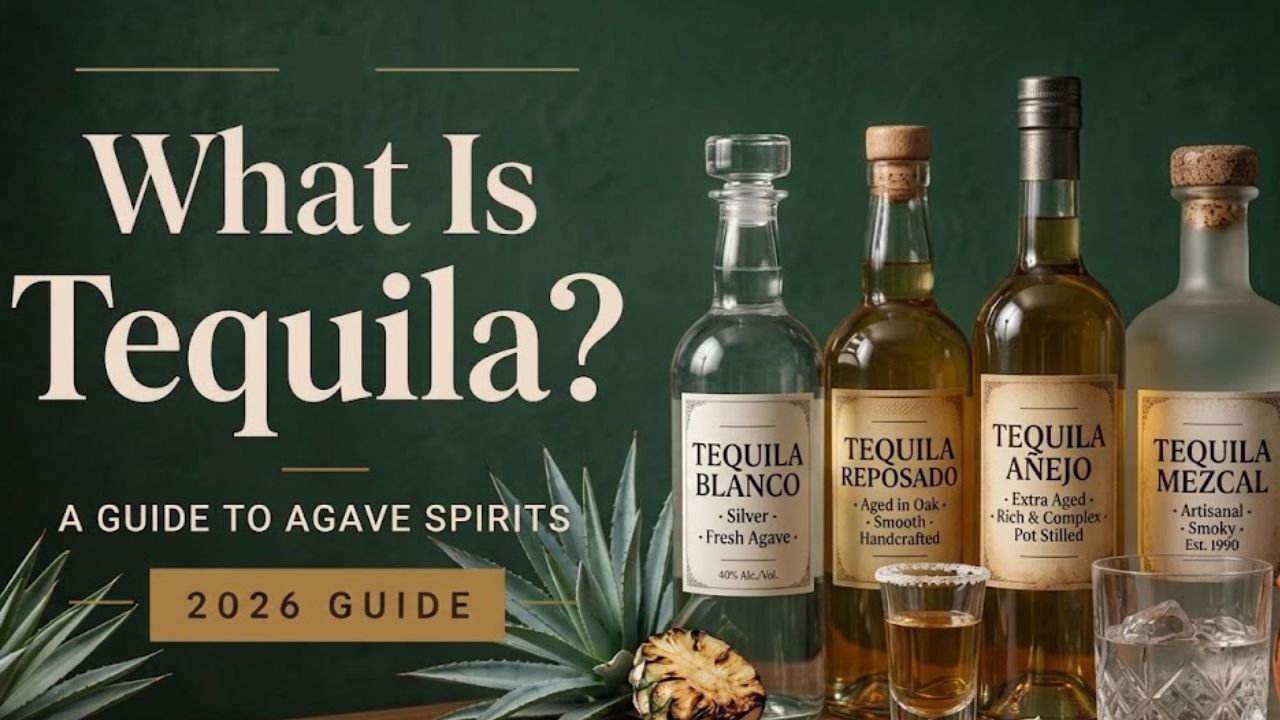

I have often noticed that whenever a bottle of Tequila is opened at a club or a house party in India, the very first thought that crosses everyone’s mind is—”Brother, tomorrow morning is going to bring a terrible hangover.” A few years ago, I used to believe the exact same thing. I thought Tequila was merely a drink meant to be choked down quickly without tasting it, just to get a sudden, intense high at a party. However, during a trip when I tasted a genuinely premium Agave spirit the right way, this myth was completely shattered for me.
The drinking culture in India’s metro cities like Delhi, Mumbai, and Bengaluru is shifting rapidly. People are no longer choosing alcohol just for intoxication; they are selecting it for the taste and the overall experience. In this mega guide, based entirely on my personal experience, I will take you through the complete story of Tequila so that the next time you stand inside a liquor store or a high-end lounge, you can make a smart, premium choice.
What is Tequila? (Beyond the Shot Glasses)
If we understand what tequila is in the simplest terms, it is a highly premium distilled alcoholic beverage originating exclusively from Mexico. However, there is a major twist here that Indian consumers often miss: not every translucent alcoholic spirit is Tequila. To legally and truly be called Tequila, the spirit must be made solely from a specific plant called Blue Agave (Agave Tequilana Weber). This plant looks somewhat like a massive aloe vera plant. The heart of this plant, known as the ‘Piña’, is harvested, cooked, and distilled to create this magnificent drink.
Throughout my tasting journey, I have noticed a massive distinction in the market. There are two categories available: 100% Pure Agave and Mixto (which contains only 51% agave juice, while the rest is topped up with synthetic sugar syrups). The cheaper brands commonly found in India are almost always Mixtos. When I sipped a 100% Blue Agave Tequila for the first time, I finally understood how earthy, subtly sweet, and smooth the real flavor profile is. If you consume cheap Mixto brands, a pounding headache the next morning is practically guaranteed because they are loaded with artificial sugars. Therefore, whenever you buy a bottle, always look for the phrase “100% De Agave” on the label.
The Rich History of Tequila: From Aztec Roots to Indian Bars
When tracing the history of Tequila, its origins go back centuries to the Aztec civilization in Mexico. The Aztecs considered the Agave plant sacred and fermented its sap into a milky, ritual beverage called ‘Pulque’. When the Spanish conquistadors arrived in Mexico during the 16th century and ran out of their own brandy, they used their distillation techniques on this fermented agave juice, paving the way for what we now know as modern Tequila. In fact, there is a small town in the state of Jalisco named ‘Tequila’, and the drink proudly takes its name from its birthplace.
The interesting part is that under Mexican law, Tequila can only be produced in a few strictly designated states, with Jalisco being the primary hub. Just like Champagne can only come from the Champagne region of France, every single authentic drop of Tequila must come directly from Mexico. When scanning the menus of top bars across India, it is clear that this Mexican heritage spirit has achieved a genuine luxury status among the Indian youth over the last few years. In premium lounges today, consumers are appreciating its heritage and craftsmanship rather than treating it as a mere party catalyst.
Decoding the Types of Tequila (My Personal Tasting Notes)
Tequila is not a one-size-fits-all drink; it changes dramatically depending on how long it has been aged. When I first learned to differentiate between these varieties, I truly began to appreciate the distinct taste profiles. Let me break down the major types of Tequila based on my personal tastings and notes.
Blanco (Silver or White Tequila)
This is the purest, unaged form of Tequila. It is bottled immediately after distillation or within two months of production. The liquid is completely clear and transparent. When I tried Blanco, I experienced a raw, earthy, and notably spicy flavor profile. This expression highlights the truest, most unadulterated flavor of the agave plant. If you want to craft an exceptional Margarita or any fresh cocktail, Blanco is your absolute best choice because its sharp, vibrant character blends beautifully with citrus elements.
Reposado (Rested Tequila)
Reposado literally translates to “rested.” This type of Tequila is aged in American or French oak barrels for a period ranging from two months up to one year. Due to its contact with the wood, the liquid takes on a beautiful golden tint. When I tasted Reposado for the first time, its smoothness completely surprised me. Compared to Blanco, the initial alcohol burn is significantly subdued, replaced by subtle notes of vanilla and caramel. For Indian consumers who prefer a smooth, well-balanced drink, Reposado hits the perfect sweet spot.
Añejo (Aged Tequila)
Añejo means old or aged. This Tequila is matured in large oak barrels for anywhere between one to three years. Due to the extended aging process, it develops a deep amber or rich golden color. Its flavor profile becomes highly complex, introducing notes of dark chocolate, oak wood, and dried fruits. If you are a whiskey enthusiast, you will naturally gravitate toward the sophisticated character of an Añejo. This expression should never be rushed as a shot; it deserves to be poured into a proper glass and sipped slowly to be fully appreciated.
Extra Añejo (Ultra Aged Tequila)
This is the most premium and expensive tier of Tequila, officially established as a category around 2006. To qualify, the spirit must be aged in oak barrels for a minimum of three years or more. Its color becomes deeply dark, closely resembling an old scotch whiskey. I had the opportunity to try an Extra Añejo at a high-end lounge once, and the texture was as smooth as butter, where the raw agave flavor had fully integrated with rich, smoky, oaky undertones. It carries a heavy price tag and is only available at highly select, premium liquor boutiques in India.
Joven (Gold Tequila)
This specific category causes the most confusion among the Indian audience. Commonly marketed as ‘Gold’ Tequila, it is usually just an unaged Blanco Tequila that has been artificially altered with caramel coloring, glycerin, and sugar syrups to make it look aged. If you find a cheap bottle labeled ‘Gold’, it is highly likely a Mixto. My personal recommendation is to steer clear of these budget gold versions unless it is explicitly a high-end, premium blended Joven, as the synthetic additives are a primary cause for a harsh morning hangover.
Tequila vs. Vodka: The Indian Party Dilemma
Whenever white spirits are discussed in India, an immediate debate sparks up: Tequila vs Vodka. Vodka has held a long-standing dominance in our local party scene, but premium Tequila has steadily carved out its own elite real estate at the table. Having evaluated both spirits closely, their core characters are entirely distinct from one another.
Vodka is a spirit designed by definition to be neutral. It is distilled from potatoes, corn, or grains multiple times with the explicit goal of removing any distinct taste or aroma, making it an excellent, invisible canvas for fruit juices or soft drinks. Tequila, on the other hand, possesses a robust, highly distinct, and earthy identity that tells you exactly which soil it came from. If you want a drink that hides itself seamlessly in a mixer, people choose Vodka; but if you want to experience a rich, premium, and natural agricultural flavor, Tequila stands completely unrivaled.
Below is a complete comparison table mapped to the Indian market, highlighting top Tequila and Vodka brands, their estimated prices, taste segments, and the best way to enjoy them.
| Alcohol Category | Brand Name | Approximate Price in India (INR / 750ml) | My Personal Taste Rating (Out of 10) | Best Way to Consume |
| Tequila (Blanco) | Don Julio Blanco | ₹7,500 – ₹8,500 | 9.5 / 10 | On the rocks or mixed into a premium, fresh Margarita. |
| Tequila (Blanco) | Patron Silver | ₹8,000 – ₹9,000 | 9.0 / 10 | Sip it neat and slightly chilled; its herbal notes are exceptional. |
| Tequila (Reposado) | Jose Cuervo Reposado | ₹3,200 – ₹3,800 | 7.5 / 10 | Enjoy with an orange slice and a light dusting of cinnamon powder. |
| Tequila (Reposado) | 1800 Reposado | ₹5,500 – ₹6,500 | 8.5 / 10 | Its smooth, woody touch makes it brilliant for relaxed sipping. |
| Tequila (Añejo) | 1800 Añejo | ₹7,000 – ₹8,000 | 9.0 / 10 | Sip it completely slow and neat, just like a fine whiskey. |
| Vodka (Super Premium) | Grey Goose | ₹4,000 – ₹5,000 | 8.5 / 10 | Served as a chilled shot or clean with premium tonic water and lime. |
| Vodka (Premium) | Absolut Vodka | ₹2,500 – ₹3,200 | 7.5 / 10 | The most dependable and consistent base for any fruit cocktail. |
| Vodka (Budget) | Magic Moments | ₹1,000 – ₹1,300 | 5.5 / 10 | Best suited for budget house parties utilizing heavy mixers. |
Note: Prices can vary noticeably depending on the specific state excise tax laws (such as Delhi, Mumbai, Bengaluru, or Goa).
How to Buy the Right Tequila in India? (My Checklist)
When you walk into a crowded Indian liquor vend, the overwhelming environment and limited display options often lead people to grab the wrong bottle. Learning from the mistakes I made during my early days, I put together a straightforward checklist to ensure you always bring home an authentic bottle.
The absolute first rule of thumb is to look for “100% de Agave” or “100% Pure Agave” clearly printed on the front or back label. If the label merely says ‘Tequila’ without highlighting 100% agave, you are holding a Mixto. The missing percentage in that bottle is made up of cheap fermented cane sugar or corn syrup, which tastes unnecessarily harsh on the throat and triggers severe dehydration. If you want a genuinely good experience, it is entirely worth spending that extra amount to ensure your bottle is 100% pure Agave.
The second rule is to verify the NOM number. Every single authentic bottle of Tequila produced under regulatory standards displays a 4-digit NOM code (Norma Oficial Mexicana) assigned by the Mexican government. This code serves as legal certification that the product was crafted in a verified, regulated distillery inside Mexico. If you spot a NOM number on the bottle, you can rest fully assured that you are purchasing an authentic, high-quality international product.
Conclusion: The Evolving Tequila Culture in India
Ultimately, Tequila is far more than a rapid-fire party shot to be swallowed as fast as possible; it is a deeply complex, nuanced art form that reveals itself beautifully when given a little time. The growing awareness around premium lifestyles in India is exactly why metro bar counters are seeing an unprecedented influx of high-quality agave spirits.
Ever since I moved away from cheap sugar-heavy mixers and began slowing down with a quality Blanco or Reposado—enjoying it smoothly without the frantic routine of salt and lime wedges—my entire perspective on this spirit has transformed. The next time you choose a bottle to share with your friends, keep the pointers from this guide in mind and opt for a well-crafted choice.