

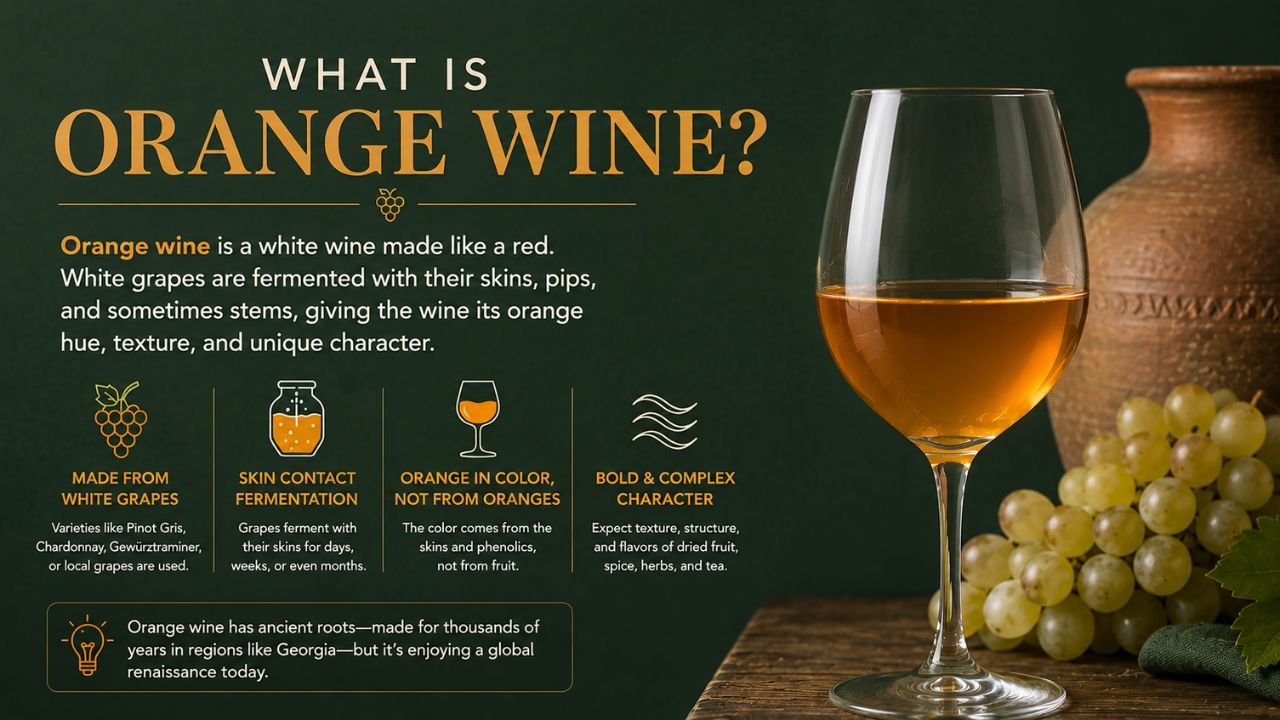

Walk into a modern wine bar and you might spot a glass filled with a deep amber liquid that looks nothing like traditional white wine. The main question that one is inclined to ask in the first place is simple: Is it made of oranges? The answer surprises almost everyone. The reason why orange wine has received a lot of attention is that it is something unique compared to regular red and white wine. It unites freshness, texture, form and food-friendliness in one glass. Although the style is trendy, it can be traced back thousands of years. If you’ve ever wondered “what is orange wine?”, why it looks different, its taste, the reason to try it, and whether you should or not. You will find the answers to all these questions in this post. Regarding production techniques for food matching, this article encompasses all that makes orange wine one of the most fascinating ones in the wine industry.
What Is Orange Wine?
Orange wine is a style of wine made from white grapes that ferment with their skins for an extended period. Compared to traditional white wine, the grape skins are not removed immediately after pressing by the winemakers. The wine will therefore take on a richer amber or orange shade, becoming more textured and complex. They are also gently tanned on the skin, producing a deeper mouthfeel. Contrary to its name, orange wine does not include oranges. Rather, it presents an intriguing mix of the characters of freshness and white wine and the character of character and red wine.
| “Orange wine is made from white grape varieties such as Pinot Grigio, Sauvignon Blanc, Chardonnay, Malvasia, and Ribolla Gialla.” |
Orange Wine vs White Wine: Key Differences in Taste, Texture, and Production
Two beverages can start with the same grape, namely orange wine and white wine, but end up being very different. Classical white wine incorporates freshness, acidity and fruit-based flavours. Orange wine focuses on the texture, structure, and complexity. The most prominent difference is the mouthfeel. Orange wine tends to be richer and more opulent. Most consumers equate the brewed tea feeling to many drinkers due to the weak tannins.
| Characteristic | White Wine | Orange Wine |
| Color | Pale Yellow | Amber or Orange |
| Skin Contact | Minimal | Extended |
| Tannins | Very Low | Moderate |
| Body | Light to Medium | Medium to Full |
| Complexity | Fruit Focused | Layered and Savory |
As a result, orange wine often appeals to people who find standard white wines too simple.
Why Is It Called “Orange Wine”?
The name creates confusion because it sounds like a fruit wine made from oranges. That is not the case. The name of orange wine is fully dependent on its appearance. The grape skins gradually impart pigments to the juice during fermentation. This process forms hues of golden yellow to deep copper and orange.
Depending on the grape variety and fermentation length, the wine may appear:
- Amber
- Bronze
- Copper
- Deep Gold
- Burnt Orange
The color becomes the easiest way to identify the style.
| A Brief History of Orange WineAlthough orange wine has become popular in recent years, its history stretches back thousands of years. Historians attribute the style to the Governorate of Georgia, where wine producers fermented grapes in huge clay vessels known as qvevri. According to archaeological evidence, this technique is over 8,000 years old. Most contemporary manufacturers continue to use such methods, since they think that fermentation through skin-contact develops more depth and versatility in the resulting wine. |
How Orange Wine Is Made: The Skin-Contact Process Explained
There are a lot of wine terms that one finds to be quite complex, but the process of producing orange wine is quite simple to comprehend. This starts with white grapes. The grapes are crushed after the harvest. The winemaker does not strip the skins off at once, but leaves them to come in contact with the juice.
What Happens During Fermentation?
The grape skins slowly release:
- Color
- Tannins
- Aromatic compounds
- Texture-building elements
The length of contact makes a big difference.
| Skin Contact Time | Wine Style |
| Few days | Light and fresh |
| Few weeks | Balanced and textured |
| Several months | Bold and intense |
The common question What is orange wine made of is also answered in the process. The wine is made out of white grapes; however, long contact with the skin gives the wine its unique character.
Where to Try Orange Wine in Ballard, Seattle
Ballard has emerged as a hot spot for wine lovers seeking new styles. Orange wine has turned up in many local wine bars and bottle shops where clients are increasingly demanding something other than the traditional reds and whites.
When this is the first time you are trying orange wine, request a lighter skin-contact bottle. These wines can be a less abrupt introduction and tend to be able to comprehend the reasons behind the style having garnered such a fervent following. A decent waiter will tend to sell you a bottle depending on whether you tend to drink one can of Sauvignon Blanc, Chardonnay, Pinot Noir, or craft beer.
What Does Orange Wine Taste Like? Flavor Profile and Aroma
Orange wine cannot be characterized by one particular flavor. Tasting is determined by the type of grape, climate and style of winemaking. Nevertheless, a few flavor notes can be found frequently across the bottles.
Common Fruit Notes
- Dried apricot
- Peach
- Orange peel
- Pear
- Quince
Common Savory Notes
- Chamomile tea
- Herbs
- Nuts
- Earth
- Ginger
The texture often stands out more than the flavor. Many people describe orange wine as having a tea-like grip. It feels fuller and more structured than traditional white wine. A skin-contact Pinot Grigio, for example, often tastes richer and more layered than a standard Pinot Grigio from the same region.
Is Orange Wine Sweet or Dry? What First-Time Drinkers Should Expect
The majority of orange wines are dry. The dark colour sometimes gives the impression that the wine will be sweet. But the category is scarcely ever characterized by sweetness. A lot of individuals view texture and aroma as being the source of what is perceived as sweetness. The wine can smell of ripe fruit, honey or dried apricots, but it tends to dry out on the palate. This dryness can explain the fact that orange is a good pairing wine with food.
Does Orange Wine Have More Tannins Than White Wine?
Yes, the orange wine traditionally contains more tannins than the traditional white wine, since the skins of the grape are in contact with the juice when the fermentation takes place. Tannins in grapes are natural and give structure, texture and a low degree of drying palate sensation. Although orange wine tends to be less tannic than red wine, it has a lot of grip and complexity compared to most white wines.
Orange Wine vs Natural Wine: Understanding the Real Difference
The terms are commonly used interchangeably, though they have different meanings. Orange wine is used to refer to a type of production. Natural wine refers to a philosophy of winemaking.
Simple Comparison
| Orange Wine | Natural Wine |
| A style of wine | A production philosophy |
| Uses skin contact | Uses minimal intervention |
| Can be conventional | Can be any wine style |
Some orange wines are natural. Others follow traditional commercial winemaking practices. The overlap is common, but the categories are not identical.
Who Should Try Orange Wine? Ideal Drinkers and Flavor Preferences
Orange wine appeals to a variety of drinkers due to its relationships with a number of drink groups. Food enthusiasts, natural wine drinkers, and those who consume craft beer are people who tend to take a bite of orange wine.
It Often Appeals To:
- Red wine lovers seeking something lighter
- White wine drinkers wanting more complexity
- IPA enthusiasts who enjoy bitterness and structure
- Curious food lovers
A restaurant owner added that some clients who are used to ordering beer often acquire the orange wine after the first tasting flight. The texture is traditional, whereas the flavors are clearly wine-like.
Who May Not Enjoy Orange Wine on Their First Tasting?
Orange wine does not have an appeal everywhere. They are too structured and can occasionally be too crisp and simple in the eyes of people who enjoy their white wines very crisp and simple. The tannins can be a problem for others on their introductory tasting.
Orange wine can be pleasantly dry to those who like extremely sweet wines. This does not imply that you should not do it at all. Going with light styles normally gives a pleasant experience as compared to directly going into the highly tannic bottles.
Best Foods to Pair With Orange Wine for Maximum Flavor
Food pairing is one area where orange wine truly shines. Because it combines acidity with texture, it handles foods that challenge many other wine styles.
Strong Pairing Categories
| Food Style | Why It Works |
| Indian Cuisine | Handles spice well |
| Mediterranean Food | Complements herbs |
| Charcuterie | Matches savory flavors |
| Grilled Meats | Balances richness |
| Aged Cheese | Supports strong flavors |
Many sommeliers consider orange wine one of the most flexible food wines available.
Best Orange Wine Pairings (Easy Wins)
Some combinations are seldom disappointing, provided that you order your first bottle. Mushroom pizza is also a very good match: the earthy tastes go well with the savory nature of wine. Thai curry is also a great pairing since the structure of the wine is sturdy against the spice.
The other great option is a meat board consisting of cured meats, olives, nuts and aged cheeses. With every bite, you taste another dimension of the wine. An example in point is the abundance of wine bars that serve the orange wine with roasted veggies. The mix is normally a shock to visitors due to the fact that these flavors appear to be interlinked.
What Should You Avoid Pairing With Orange Wine?
Not every food creates a successful match. The dry orange wines are quite incompatible with very sweet desserts. Delicate fish also may not fare well since the texture of the wine can overwhelmingly dominate the delicate flavors. Heavy-cream dishes, lacking any herbs or seasoning, also render the matching clumsy. It is not a bad idea to use foods that may include spice, herbs or savory flavor when in doubt.
How to Serve Orange Wine for the Best Drinking Experience
Serving temperature can change the entire experience. Orange wine performs best when lightly chilled rather than ice-cold.
Recommended Serving Conditions
| Factor | Recommendation |
| Temperature | 10–13°C |
| Glass Type | White wine glass |
| Storage | Cool, dark place |
| Open Bottle Life | 1–2 days |
Too much cold suppresses aroma. Too much warmth can make tannins feel stronger. Finding the balance allows the wine’s complexity to shine.
Does Orange Wine Go Bad Faster?
There are preservatives in some orange wines that are lower than those in traditional wines. Due to that, they will be able to develop faster upon opening. To get the maximum flavor, one should seal the bottle again after consumption and keep it in the fridge. Many bottles will be good for one or two days. But already, there is a gradual decrease in freshness. The precise longevity is related to the style of the winemaker and the structure of the wine.
How to Choose Your First Bottle of Orange Wine (Beginner-Friendly)
The first bottle often shapes your opinion of the category. Find wines that are characterized as fresh, floral, citrus-driven, and lightly textured. These styles tend to provide a more fluent introduction.
You should not use very oxidative bottles at the beginning of your experience. Although they are some favorites among wine lovers, newcomers tend to struggle with them. As you shop, you need to enquire about the length of contact with the skin of the wine, whether it was short or long. Little-touch wines are likely to be more amiable.
How Much Alcohol Does Orange Wine Contain? Understanding ABV Levels
Many individuals think of the colors and taste of orange wine, yet there is another factor that deserves attention; alcohol content. Although the orange wine is produced in its own special manner, the level of alcohol is normally the same as that of most white or red wines. The last percentage is based on the type of grape, vineyard site, the time when the harvest takes place and the fermentation process applied by the winemaker.
Warmer regions also have wine, which tends to grow more natural sugar during harvesting. These wines can achieve a slightly higher level of alcohol since sugar is fermented to form alcohol. Though the majority of the orange wines are not too extreme and can be enjoyed by the average wine consumer.
| Wine Style | Average Alcohol Content |
| White Wine | 11%–13% |
| Orange Wine | 11.5%–14% |
| Red Wine | 12%–15% |
The majority of orange wines have the same alcohol range as conventional white and red wines. The possible percentage depends on the grape variety, the climate and the winemaking. Grapes in warmer locations are more likely to have higher sugar content and this could lead to a slightly higher amount of alcohol formed after fermentation.
Why Orange Wine Is the Perfect Balance Between Red and White Wine
Many drinks can easily fall into a category. Orange wine does not. It is white wine mixed with a touch of the structure of red wine. Simultaneously, it offers a challenging quality to appeal to craft beer lovers and adventurous drinkers.
Such a balance enables orange wine to be one of the most diverse options that people prefer when trying new tastes. Eat it with your meal, or lounge on it, taking small bites at a time, the wine before you is likely to show you something new every time.
Best Places to Explore Orange Wine in Seattle
The wine scene in Seattle, by still adopting skin-contact wine, is still available in Ballard, which is one of the most intriguing neighbourhoods in the city where one would uncover wine. Local wine bars usually switch their selections which means visitors can compare different grape varieties and methods of production. Coming into the world of two or three orange wines at the same time can be enough to acknowledge the diversity that is frequently introduced by the category. A tasting flight is a good place to begin, in the case of a first-time visitor to the style. It offers a useful means to comprehend the effect of grape variety and skin contact on the end product.
Why Wine Professionals Appreciate Orange Wine
Many sommeliers regard one of the wine styles that goes best with food as orange wine. It combines acidity, texture, and medium tannins that enable the wine to match well with foods that usually defy both red and white wines. The orange wine is becoming a more commonly offered wine in tasting menus at restaurants, as it is a flexible wine with a wide variety of courses and cuisines.
Conclusion
Orange wine provides a totally different experience compared to traditional white wine, but does not scare the curious drinkers. Its unique color, rough texture in the mouth and the fact that it is food friendly all contribute to the reason why the product is increasingly gaining popularity among wine lovers around the world. The style is a blend of old-fashioned winemaking and the new one as it incorporates elements of both old and new, making the category seem both old and thrilling.
You like spicy, like trying food options or you just want to be able to try something different than red and white, orange wine should be on your list. Understanding “What is orange wine?” will help you admire the art that goes into every bottle, as well as the personality that fermentation with the skin produces. The only thing that can make it attractive is straightforward: take a good bottle, replace it with tasty cuisine, and make up your mind.
Explore Related Blogs: What Is Beer? Ingredients, Brewing Process & Beer Styles